St. Stephen's Cathedral history at a glance
St. Stephen's Cathedral history in Vienna begins with a Romanesque church, continues with a Gothic expansion and includes a major rebuilding after the fire of 1945. Stephansplatz is the place to start. Face the Giant's Gate to pick out the Romanesque west front, then look up at the tall South Tower and the capped North Tower. The different silhouettes help make sense of a building shaped over centuries.
This independent guide uses the building itself as a starting point. Begin outside if the visit coincides with Mass, then use the interior guide to find the Gothic pulpit, the Baroque high altar and the tomb of Frederick III when the visitor areas are open.
Romanesque west front and Gothic expansion
The west front of St. Stephen's Cathedral preserves the Giant's Gate and the two Heidentürme from the second Romanesque church, built between 1200 and 1225. Work on the first church began in 1137 and it was consecrated in 1147. The surviving west front therefore belongs to a later phase than the first consecration. Both Heidentürme are closed to public visits, so view them from the square.
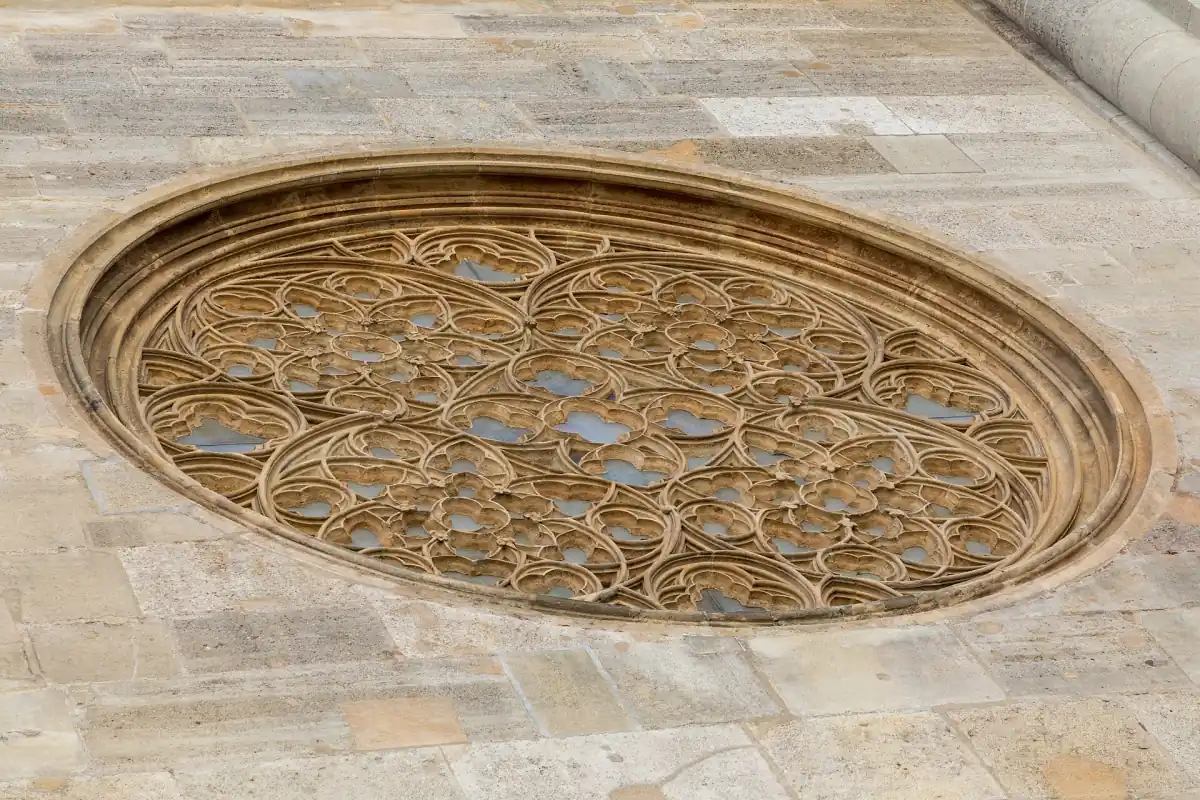
The Gothic expansion took in the choir, nave and towers. The Albertine Choir was built between 1304 and 1340 and consecrated in 1340. In 1359 Rudolf IV laid the foundation stone for the nave and South Tower. The South Tower was completed in 1433. Work on the North Tower started in 1450 and stopped in 1511. Its Renaissance cap dates to 1578.
Old Town history and cathedral
This private walk shares Vienna’s history and includes a quiet cathedral stop when access permits.
Hand-picked tours, booked through GetYourGuide. Prices are indicative starting prices in euros (as of November 2026). Tap a tour for live availability and the current price in your currency.

Vienna Old Town walk with a cathedral stop
A private Old Town walk starts at Wien Museum musa and includes a Danube Canal cruise. When services permit access, the cathedral stop is a quiet visit to the free area.
Fire, reconstruction and the new Pummerin
St. Stephen's Cathedral lost its timber roof and the old Pummerin in April 1945 when fire spread from neighbouring buildings. The old bell fell and the interior suffered severe damage. The new roof was completed in 1950 and the cathedral reopened on 26 April 1952. A steel structure now supports the roof, whose glazed tiles form patterns and include the coats of arms of Vienna and Austria.
The new Pummerin was cast in 1951, consecrated in 1952 and raised into the North Tower in 1957. For a closer look at the bell, see the tower guide for the lift route and the steps beyond the main platform. To see the roof on a special tour, look for the German-language programme from early May to late October.
Stephansplatz and an Old Town walk
Stephansplatz and the Graben give a self-guided walk two landmarks: the cathedral's west front and Vienna's Plague Column. Start at the Giant's Gate and use the Graben for the next stop. The directions to Stephansplatz explain which metro lines serve the square. For sights elsewhere in the city, see Vienna's city guide.
The private Old Town walk with a canal cruise meets in front of Wien Museum musa at Felderstraße 6 to 8. Allow 255 minutes for the programme, including 75 minutes on the Danube Canal. Prices start at EUR 322 per person as of November 2026. For a guided visit inside the church, see the cathedral ticket and tour guide.

Questions about St. Stephen's Cathedral history
When was the first church built?
1137 marks the start of construction of the first church on the site of St. Stephen's Cathedral, and it was consecrated in 1147. The Romanesque stonework seen around the Giant's Gate and the Heidentürme today belongs to the second Romanesque building phase, between 1200 and 1225.
Why do the North and South Towers look different?
St. Stephen's Cathedral has a Gothic South Tower completed in 1433 and a North Tower capped in the Renaissance. Construction on the North Tower began in 1450 and ceased in 1511, before the cap was added in 1578. Compare their profiles from Stephansplatz before looking at the routes up the towers.
Where can visitors see the Pummerin?
The Pummerin hangs in the North Tower of St. Stephen's Cathedral, reached by a lift from the left aisle inside the church. The bell on view was cast after the fire and installed in the tower in 1957. It sounds on designated occasions in the church or state calendar.